19 January 2012

IDŐJÁRÁSJELENTÉS


IDŐJÁRÁSJELENTÉS
Az ország kedvenc időjárásbemondójától, Orbán Viktortól:

Várható időjárás:

Borult az ég.  Erős szelek Európa felől, főleg bal szélirányból, ahonnan orkán erősségű ellenszelek is érkeznek.

A hét eleji fagyos reggelek és meghunyászkodások után jöhetne az enyhülés, talán a hónap vége felé a hitelkere…hőmérséklet megközelítheti a +17-20 milliárd Celsius-fokot, ha sikerül eloszlatni a kételyeket.

EU-s időjárásmonitoringra is van kilátás, de a viharos széllökések ellenére is a kormány kijelentésáradata homályosabb lesz a megszokottnál – külföldről nagyon nehéz lesz megalapozott jóslatokat tenni a politikai klímaváltozásra, annak irányára és mértékére!

Ezenkívül gyenge melegházasodási fronthatás lehet, de egyelőre marad a felhőzet, tavaszias melegvonulástól és az abból származó fejfájástól még nem kell tartani. Meteorológiai és törvényhozói számításaink szerint majd csak vegyes halmazállapotú csapadék fordulhat elő.

Légnyomás: még bírom.

Paratartalom: attól függ, velem vagy, vagy ellenem.

15 December 2011

New Book on Interpreting

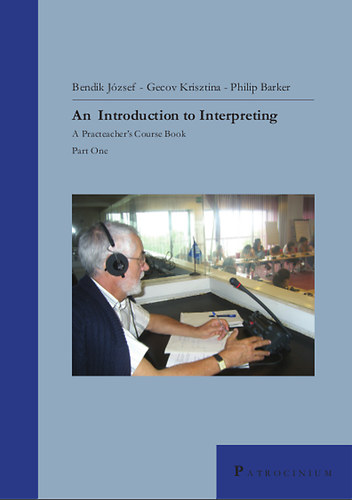
At last! I am now co-author of the following book:


Here is a link for purchasing the book if anyone is interested:
http://bookline.hu/product/home!execute.action?_v=Bendik_Jozsef_Gecov_Krisztina_Barker_Philip_An_Introduction_to_Interpreting&id=107881&type=22

An Introduction to Interpreting - A Practeacher’s Course Book Part One
Bendik József - Gecov Krisztina - Barker, Philip
Patrocinium Kiadó, 2010
222 oldal
Kötés: papír / puha kötés
ISBN: 9786155107146
A jegyzet egyszerre összetett és egyszerű, akárcsak maga a tolmácsolás. Bendik József több évtizedes értékes tapasztalataiból tömören, ugyanakkor finom, elegáns angolsággal megírt jegyzete igen hasznos kézikönyvként szolgál úgy kezdő, mint gyakorló szakmabeliek számára, sőt nem túlzás azt állítani, hogy kellemes olvasmány lehet bárki számára, akit érdekel a nyelvi kifejezés világa, a nyelvi és a kulturális közvetítés kérdése.

Strangely a few typos have been "added", even after I proofread the manuscript about 50 times. Still, I hope readers will find it engaging. Volume 2, a workbook, is planned for release in 2012.

21 June 2011

BREAKING NEWS, NEW HOLLYWOOD BLOCKBUSTER SET FOR RELEASE IN 2013!


See original article at http://amexrap.org/fal/viktor-vitez

On the basis of an email sent by the government directly to me for translation, I can now reveal an exclusive sneak preview of the official film synopsis for Viktor Vitéz, a swashbuckling tale of life in Central Europe, with a brave leader struggling against the odds to maintain a two-thirds majority, and evil, scurvy-ridden communists lurking everywhere in the background ready to strike at the heart of the national interest!

Film industry commissioner Andrew Vajna plans to sign stars who will draw massive crowds, and he believes that Etyekwood starlet Ferenc Gyurcsány has the potential to attract a huge following of lynch mobs!

Vajna promises that the CGI will be better than in the Terminator, and that the wigs will be of the highest possible standard.

At a press conference yesterday Prime Minister Viktor Orbán announced that he would turn down a leading role in the film as he is currently acting as Prime Minister of Hungary in a controversial tragicomedy named “The Politics of Hungary”.

———- Forwarded message ———-
From: OrbanViktor@twothirdsmajorityfucku.hu
To: [...]@gmail.com
Date: Thu, 16 Jun 2011 12:28:18 +0200
Subject: Philip translate this or else!

Kedves Philip!

Kérjük, tegyen egy árajánlatot, hogy mennyibe kerülne és mikorra lenne kész a mellékelt szinopszis lefordítása. Tudjuk, hogy ez magasröptű költészetnek minősül, de ezt a szépséget szeretnénk visszaadni angolul.

Köszönettel:

Viki és Andi
-------------------------------------------------------------------------------------------------

VIKTOR VITÉZ
Szinopszis

Producer: Andrew Vajna, Hollywood Überkirálya
Rendező: Rubik Ernő

Szereplők:
Kukoricza Viktor – Sylvester Stallone
Iluska – Kate Winslet
Gyurcsány Ferencz (Iluska Mostohaanyja) – Gyurcsány Ferenc
Kutyafejű Tatár – Jackie Stallone

1

Vörösen süt le a komcsi nép csillaga,
Gyurcsány a trónon ül, léhább mint valaha,
Fölösleges dolog ott ülnie oly nagyon,
A Fidesznek úgyis két harmada vagyon.

Hazafias tűz ég Orbán szivében,
Úgy kapott voksot a messzi vidéken,
Határontúli nyája szerte heverész,
De komcsikat közben nagy vereség emészt.

Később szónokolt derék népek közepett,
S Kukoricza Viktor ekkép elmélkedett:
“Figyeljük most jól, hogy csillaguk leszalad,
A kommunista párt már végre megszakad.”

A ciklus aközben haladott sietve,
A Duna habjain vöröslött az este.
Dúlt-fúlt valahol a rókalelkű Gyurcsány;
Gaz terveket szőtt a csúszó-mászó csótány…

Jaj neked Viktor, szegény árva Orbán!
Hátad mögött jön már a dühös Gyurcsán’;
Nagy szája megnyílik, kapu a pokolba,
Nagy veszélyben van a Magyarok bajnoka!

TO BE CONTINUED…
-------------------------------------------------------------------------------------------------


24 January 2011

HUNGARIAN MEDIA LAW - BREAKING NEWS


Last night tabloid and sports journalists came together in an unlikely gathering of minds to express their concerns over the newly proposed Hungarian Media Law.

The new law would force media outlets to provide “balanced reporting” and oblige them to supply accurate information considered “necessary for society.”

“What is at stake here is nothing less than the freedom of the press,” complained journalist Attila the Hungarian, who claimed that the law would infringe upon the interests of the tabloid business sector: “We must be ensured the right to make money, no matter what kind of content we put out. The freedom to make wads of cash and pretend that we are morally incorruptible, objective and important is a fundamental human right that we journalists must defend.”

Mr Hungarian further criticized the clause on providing “balanced communications,” claiming that journalistic standards in Hungary were already of the highest order: “If we report that God speaks Hungarian, then no governmental authority has the right to question the veracity of the facts. This is because the truth is out there. Everyone knows this. Even my grandma does. So there.”

Visibly distressed by the revelation of the new law, sports journalist János Weissmuller (107) voiced his exasperation: “It’s the end of the world. Sports news will never be the same again. How can we criticize referees’ decisions now?”

Despite the indignation felt in journalistic circles, many details of the proposed legislation remain unclear, as no one has actually read the aptly named “Act CLXXXV of 2010 on Media Services and Mass Media."

As a result, Cuddles Cicciolina (spokeswoman for Hungarian adult magazine “Rumpy Pumpy”) was left searching for answers: “Does this mean we can’t photoshopically enhance the breasts of our models?”

Ms Cicciolina later repudiated claims that she had partaken in zoophilia, and emphasized her belief that the Hungarian people widely embrace European values on media freedom: “No matter what the government does, the fact remains that reading Rumpy Pumpy makes the democracy of our country stronger.”

20 May 2010

Parliament on Wheels


See original post at http://amexrap.org/

In times gone by national Parliaments were monumental buildings erected in capitals. They were buildings that signalled power, and had very limited access for the people. Those who worked in such buildings developed a penchant for becoming completely isolated from the people they governed (becoming a so-called ‘elite’). AMEXRAP’s Parliament on Wheels programme is a futuristic vision for a Parliament that moves around the country and forces politicians to visit parts of the country they would never otherwise set foot in.

The practice of taking parliament to the people already exists in some countries. Botswana has its own ‘Parliament on Wheels’ programme, in which representatives of the Speaker’s and Information offices tour villages to explain the role of parliament in society. In South Africa there are ‘democracy roadshows’ which aim to ‘take Parliament to communities that do not have ready access to Parliament so as to educate and inform people of how laws are made and how citizens can participate in law-making processes.’ Each year, the South African Parliament’s second chamber, the National Council of the Provinces, moves to a different province for a week.

We at AMEXRAP, however, intend to actually PUT WHEELS ON THE PARLIAMENT and tour it around Hungary. This is because a Portable Parliament would help those who do not have reasonable physical access to parliament by having it COME TO THEM so they can air their views, and participate more fully in democracy and democratic governance.

Another good reason for this is the following: when politicians fail to represent and serve their people, as they inevitably do, the parliament can be used as a TRAVELLING CIRCUS, ZOO and FREAK SHOW all in one. The public will have ample opportunity to express their anger and amazement in person, and noone will have to travel all the way to Budapest.

And if democracy completely fails, and large scale corruption means that everyone has had enough, then it will be easy for the public to PUSH PARLIAMENT INTO THE DANUBE (or send it to a neighbouring country) and start all over again.

In this way, the parliament may well be on wheels, but politicians will be forced to keep their feet firmly planted on the ground.

16 February 2010

Bibliotheque Pascal


Recognize anyone in here? I "acted" briefly in one of the scenes (luckily the camera does not focus on me too long) and did a load of voice-overs. I also worked as a translator, interpreter, language coach, psychotherapist - the list is endless. I've worked on a lot of Szabi's films, but this time I'm just glad the film is finally complete! Everyone put in a ton of work, and to be honest, it's a bloody miracle that it has turned out this well. The "thirty-seven, made in heaven" is one of my textual additions to the script.

13 December 2009

Dielxysa?


Can you raed tihs? When a student first sent me this image in an e-mail my haed hrut. A class discussion and a simple test ensued to try and get to the bottom of this puzzle regarding redundancy in language. Let's start with the fact that the source of this meme is a translation of an English text that spread like wildfire over the net in 2003:

Aoccdrnig to a rscheearch at Cmabrigde Uinervtisy, it deosn't mttaer in waht oredr the ltteers in a wrod are, the olny iprmoetnt tihng is taht the frist and lsat ltteer be at the rghit pclae. The rset can be a toatl mses and you can sitll raed it wouthit porbelm. Tihs is bcuseae the huamn mnid deos not raed ervey lteter by istlef, but the wrod as a wlohe.

Can the text be traced back to its source at Cambridge University? Well, it seems a number of people have tried, but to no avail. This may lead to our first doubts concerning this word scrambling game.

Here is a text on the subject created by a skeptical blogger using the "scramble script":

I snlreiecy digarese wtih the perisems put frtoh aobut scbrialnmg wrods, so I'm itionltlnaney enrovdaenig to ulizite leetnghir cpocmtaeild wodrs, not nclesiesray uonommcn wrdos, taht can not be dceerihped as ieuntlivity as tohse in the oirginal prgpraaah. The frist of my dsiceorives is taht wrods endnig in sufefxis or bnegining in pierxfes bmecoe daggesiend form the frist/lsat ltteer rothlpisneias taht spupedsloy are the baiss of the pmseires, and bemcoe mcuh mroe clinaelnhgg, amsolt ieclenaipbhrde. See?

This proves that some scrambled words are more difficult to decipher than others. Note here that words ending in suffixes or beginning with prefixes complicate matters enormously. And this leads us back to our Hungarian text, and the question of 'what do we mean by the word "word"'?

Discussing the text in class, I used the following test (a randomly selected sentence from the internet):

A talaszteny 16:9-se kpnaénayárl rizelnkeekd

Geddit?

A tesztalany 16:9-es képaránnyal rendelkezik

(The test model has a 16:9 aspect ratio)

Here we are confused by a number of factors. First of all, there are two compound nouns "tesztalany", and "képarány". You might argue that we should treat these as separate words, but there are other problems. The word képarány ("picture ratio" = "aspect ratio) ends in the comitative suffix -VAL/VEL, and to make matters worse, the initial V consonant of that suffix phonologically assimilates with and lengthens the previous consonant.(This is reflected typographically by the "nny" consonant cluster towards the end of the word). Here then, the last letter is part of an inflectional ending and not of the "base word": the addition of inflectional letters simply adds to the confusion.

Then there is the verb "rendelkezik". If we break this verb down into its constituent morphemes we come up with something like this:

REND-EL-KEZ-IK
("order" + denominal verbal suffix + reflexive suffix + s3 person marker)
"s/he/it possesses"
Here the suffixes create a verb from a noun, and give information about reflexivity and person.

Let us look at another example, and see how the meaning of the word "unfolds" as more suffixes are added:

ki [out]

ki- véd- [out-defend]

ki- véd- és - [out-defend-deverbal nominal suff.-]

ki- véd- és – é- [out-defend-deverbal nominal suff.-S3 poss. suff.-]

ki- véd- és – é - re [out-defend-deverbal nominal suff.-S3 poss.-sublative suff.]

(suff. = suffix, roughly translatable as "in its/his/her defense")

If we jumble up the letters in between, we lose too much information, and the resulting word simply becomes a mess.

So how can we understand the Hungarian (translated) text? The translator probably made a number of conscious decisions in "creating" his scrambled words. In other words, s/he manipulated the jumbling of the text to make it easy to read.

First, note that in the Hungarian text there are many letters - especially consonants - which seem to be in the same order as in the original word. This makes the processing of the words a lot easier (note that in many languages such as Hebrew, Arabic, and Persian the vowels are simply left out). If most of the consonants are in approximately the right order and/or position words are easy to make out: "iprmoetnt" is easy because "iprmoetnt" retains the right order, approximate location, and correct sounds for p - r and t - nt. Transpositions of adjacent letters are easier to read than more distant transpositions. Also, there are a number of "short" words included in the text. There is less shuffling of letters in short words than in long words, and none in say a definite article such as "a" [the]. Short words = easier to process.

We might hypothesize the following:

The meme represents a simplistic reduction of the reading process in both languages.

In both languages, a number of function words [such as "the, be, and, you" etc.] remain unchanged - mostly because they are short words. This helps the reader by preserving the grammatical structure of the original, helping him/her to work out what word is likely to come next. Context also helps: the text is reasonably predictable. After you have understood the first few words of the sentence, you can guess what words are coming next (even with very little information from the letters in the word). Context plays an important role in understanding speech that is distorted or "noisy", and the same is probably true for written texts that have been jumbled.

However, on comparing Hungarian with English in more detail, we may conclude that the process of reading comprehension in Hungarian is to some degree different to the process in English, as grammatical information unfolds within words to a greater degree in Hungarian. By contrast, in English much grammatical information is conveyed by word order, as English is an inflectionally poor language.


It stands to reason that there is a stronger reliance on analytic strategies when reading words in an agglutinative language such as Hungarian, as prefixes, suffixes and inflections may provide a lot of additional grammatical information. In English many of our "words" map directly to morphemes, so perhaps there is a greater tendency towards "direct lexical access", otherwise known as "whole-word" or even "logographic" reading, where words are treated like images.


In conclusion, the text shows some of the power of redundancy in both languages, but it's not as simple as saying that letter order does not matter at all. It is a very reductive, pseudo-scientific meme.

And while we're on the subject, somebody should tell the people at French Connection UK that most people think their t-shirts read "fuck". Surely that's inappropriate. Maybe they got the idea from "CFUK", or "Conservative Future UK".

08 October 2009

Magyar-Alkohol Szótár

As social and cultural animals, humans have developed a rich and diverse vocabulary of intoxication-related language to describe the subjective states they experience when drinking. Here, for advanced learners of Hungarian and other "beerlinguals" is the "Magyar-Alkohol Szótár" (Hungarian-Alcohol Dictionary):

Méezsör. - Szeretnék még egy (utolsó) sört kérni
N'düzed. - Kérem adjon tüzet, legyen szíves.
Gyogizsdzsaj. - - Nagyon vonzónak találom Önt, kisasszony.
Möfaszan. - Bocsánat, nem értettem amit mondott.
Huubaze. - Sajnos úgy érzem, hogy rövidesen rosszul leszek.
Jjjjjaaaa. - Meglehetősen fáradtnak érzem magam, talán jobb lenne ha valaki segítene hazamennem.
Pisaba. - Megígérem, hogy többé nem fogok ennyi alkoholt fogyasztani.
Amászikit - Legyen szíves engem is kínáljon meg a cigarettájából!
Ö'nújm. - Nem érzem jól magam.
Dedeneemá. - Köszönöm, barátom, nem kívánok több kevertet.
Hosszméső. - Hozok még sört.
Csejde. - Gyere ide barátom!
Énnemkek. - Köszönöm, nem kérek többet inni rövidet.
Tesmonni háravn. - Elnézést, hogy megzavarom a diskurzust, de meg tudnák kérem mondani a pontos időt?
Eszökecczit. - Elszívok egy (utolsó) cigit.
Hádeteteeztígyte? - Tényleg menni készülsz?
Fiszk. - Főúr, kérem a számlámat, legyen szíves!
Itagzi. - Itt a taxim, ideje indulnom haza

26 August 2009

Latest Project: Fungarian - A New Way to Learn Hungarian


Fungarian is a special learning program and registered trademark of the HUNGAROLINGUA Language School, which has been providing language education services since 1991. Our students mostly include expats who work for leading multinational companies.

Fungarian is a method of teaching Hungarian as a foreign language which focuses on practical knowledge and communication skills. The term "Fungarian" was coined to show that the "Hungarian is a difficult, unlearnable language" cliché is just a myth. Learning Hungarian can be fun if you do it for your own pleasure, and it can be rewarding if you have immediate success, e.g. when you understand the signage in the streets or can safely use the greeting ‘csókolom’ and receive praise from locals for your good pronunciation.

The idea of coming forward with a new approach of teaching Hungarian was instigated by complaints from foreign residents who made the effort to enroll on a Hungarian language course only to drop out after three classes since they found learning Hungarian to be the “constant torture of grammar.” Fungarian focuses on lexical items in their cultural context, highlighting everyday situations and finding solutions to difficulties commonly experienced by foreigners.
We use our own materials, developed by a core team of five experienced linguists and teachers.

As well as teaching Hungarian to interested individuals, we also take care of the other needs of expats, especially newcomers. Our “off the beaten track” tours of Budapest are tailored to individual interests and have proved very successful. We also offer thematic one-day tours outside Budapest.

Furthermore, we provide tailor-made intercultural communication training and individual coaching sessions to meet company training needs.

The school is located in the centre of Pest, near Blaha Lujza tér.